Mmmm, Jazz
Listen to the episode on Mixcloud
Autumn in Cuba – The London Jazz Quartet
Mmmm, jazzz…. That’s right, an old line from The Fast Show. Still funny though. At the end of each song as you listen, you have to try your best to not go: mmmm…jazz. In find it’s very hard.
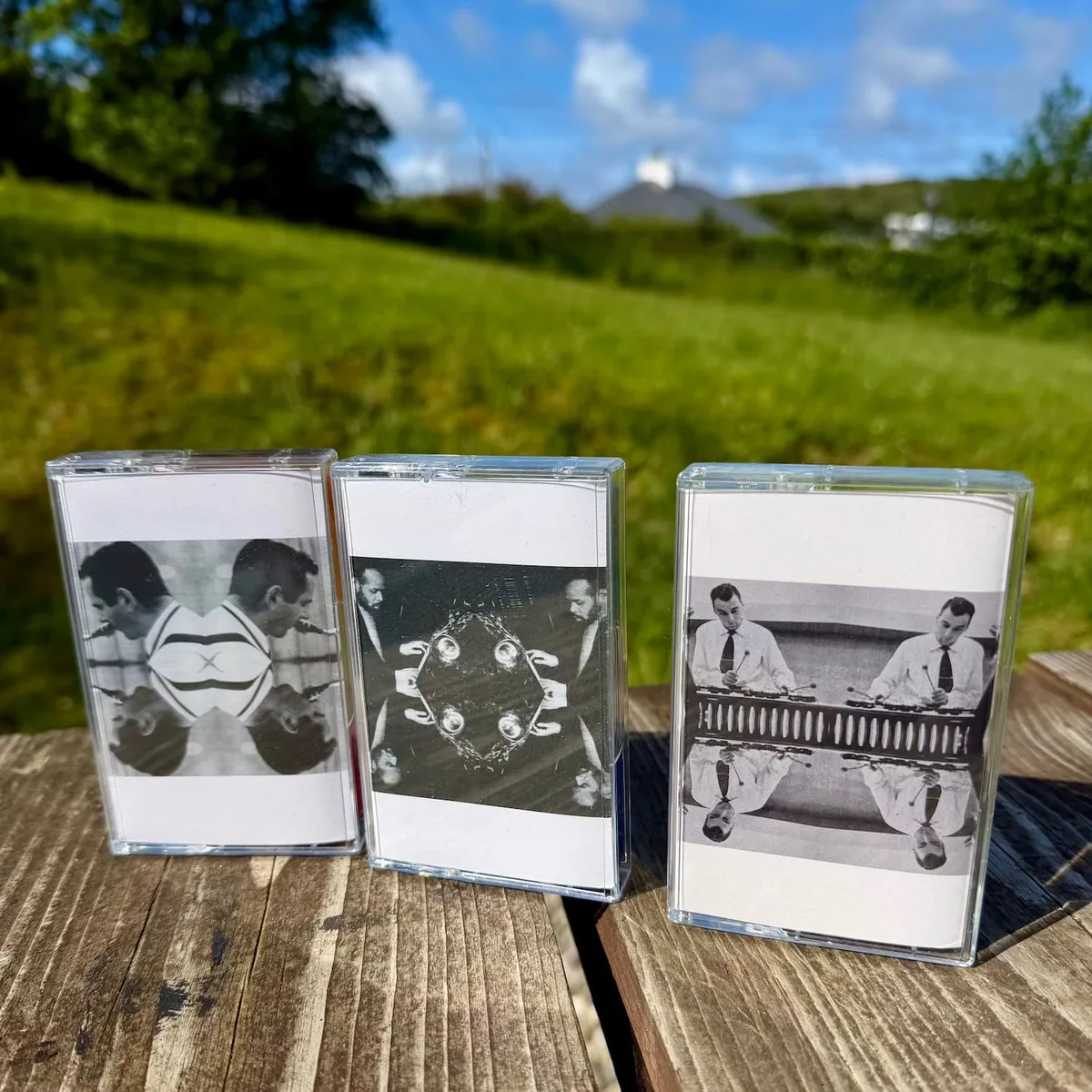
I bought three tapes from a label called Death Is Not The End who are in London1. Described as “global folk music, soundsystems, pirate radio + various wormholes”. There’s also an NTS radio show2.
The the three-tape collection is called I Had the Craziest Dream: Modern Jazz and Hard Bop in Post-War London.
A survey of the modern jazz & hard-bop scenes that emerged in the new cultural melting pot of post war London, with recordings from the end of the 1940s through to the early 1960s.
Featuring representations from players whose roots lay in the East-End’s jewish community alongside a wealth of talent of Caribbean and African descent playing and recording in post war London during this period.
I feel this merging of two different peoples is exactly why God created big cities.
I’ve run with ‘craziest dream’ for selecting songs for this post. With roughly two groups but cut in the middle by another very different kind of song. There’s three songs with a Cuba theme, then a blast of something different, then some sleepy, dreamtown night songs.
The first tune is Autumn in Cuba by The London Jazz Quartet. The musical stylings of Alan Brasco, Jack Fallon, Tony Cromby and Tubby Hayes3.
Tubby Hayes was this all-timer great sax player with a self-destructive streak. There’s a documentary on him with Martin Freeman narrating.
Alan Brascombe plays piano and vibraphone here. Vibraphone looks like a big xylophone but with metal bars, not wood. There’s a lot of vibraphone in this era. It’s got that loungy jazz vibe – feels like there’s like furry carpets around the place and you’ve a cocktail with an olive in your hand. Alan was a vibraphone/piano guy but he also played saxophone on Got to Get You Into My Life with the Beatles.
Jack Fallon, he plays bass on it. He’s a Canadian who was in the Air Force and he said, you know what, I like Britain, I’m going to stay on. There’s two good points in this song where the beat stops and then, boom, it kind of breaks into this walking bass, which I really enjoy. Jack also played with The Beatles. He was on the music scene as a booking agent and he booked The Beatles for five gigs. Later, Ringo and the gang they’re doing Don’t Pass Me By and they said, right, we need a kind of hokey-folky violin on this. And they go, hey EMI, get us a violin player. And then in walks Jack and he says, hey boys! And they go, didn’t you book us for a few gigs a few years ago? And he goes, I sure did but I also play fiddle now.
He’s quoted:
George Martin had jotted down a 12-bar blues for me. A lot of country fiddle playing is double-stop [two notes played simultaneously] but Paul and George Martin – they were doing the arranging – suggested I play it single note. So it wasn’t really the country sound they originally wanted. But they seemed pleased. Ringo was around too, keeping an eye on his song.
There you go. But look up double stops and you recognize the sound instantly. Got that American bluegrass feel to it and it is good.
Egyptian Bint Al Cha Cha – Ginger Mofolunsho Johnson & His Afro-Cuban Band
Onwards we go in this magical dream jazz…thing. Next one is easily the best-named person in this list, probably one of the best-named musicians ever. Ginger Mofolunsho Johnson.
Ginger, he came from Nigeria, and he ended up in London by joining the Navy. Another army boy, like our friend Jack Fallon. Ginger did loads of stuff, played with The Rolling Stones, has a very, very good album called African Party4, and he mentored Fela Kuti in London.
This song has a North-East-Africa feel, it feels Egyptian (or the stereotype of it at least). The main melody has a tinge of Middle-Eastern singing to it. When something feels like it’s from a place it’s always interesting to pick out why. Maybe it’s a particular instrument, maybe a groove but in this I feel it’s on the main melody.
Dance of the Zombies – Kenny Graham’s Afro-Cubists
This song is very much on crazy dream theme. I mean, if zombies are dancing then you know your dream is kicking off5.
I like this info from Kenny Graham’s Wikipedia article:
He joined the army in 1942, expecting to join a service band, but was turned down for that role and went absent without leave, dyeing his red hair black and working under the name Tex Kershaw for two years as a member of Johnny Claes’s Claepigeons.
Just great great names all around here. Tex Kershaw’s Afro-Cubists would have been better though.
About a year ago I went, what’s the deal with Afro-Cuban music? It’s long and complex and doesn’t make a good story in a pithy little article like this. But the main gist is that Cuba for centuries was a massively fertile ground for music. Long established slave or ex-slave communities brought particular rhythmic drum patterns and melodies. It had a prestigious colonial class who played classical music and were very highly regarded with touring orchestras all around the Americas in the 19th century. You also have Spanish folk in there, particularly people from the Canary Islands in the countryside. And you have some Spanish people with African heritage too. And it’s a huge port place with mixing of people, musics, rhythms as well. You could kind of spend your life peeling back the layers of music cultures.
What’s important is that Cuba is just this tiny little island and it has this seismic influence on the entire Americas. What I find fascinating though, is the American South, Louisiana, is about a thousand kilometers away, but it feels like very different in music. Even if people in the US South were also descended from West-African people, the rhythms, the music is completely different. Afro-cuban music and blues are so close geographically and in diaspora but the styles are so different. So culturally, what happened?
There’s the differences between the colonial slave-owning classes in both places and how they allowed how people to congregate and enjoy themselves. Things were a bit more permissive in Cuba than it was in the US South where people were more stripped of traditions and music became more solo or solitary or could only be played within the boundaries of the Protestant churches. This begats gospel, blues, ragtime, eventually jazz.
What is really interesting is in the 40s, people start connecting these music cultures together. Famous jazz musicians were making a point of saying we’re blending US jazz music with Latin music.
Taking a quote from those scholastic Prods over in Encyclopedia Britannica:
In the decades leading to 1940, Latin American melodies and dance rhythms made their way farther northward into the United States, while the sounds of American jazz spread through the Caribbean and Central and South America. Musicians and dancers across the entire region became familiar with both musical languages, and the large bands of the swing era expanded their repertory to include rumbas and congas, two types of Afro-Cuban dance music. Those developments laid the foundation for the fusion of jazz and Cuban music, a process inaugurated in 1940 in New York City with the establishment of the Machito and the Afro-Cubans orchestra
…
Dizzy Gillespie, one of the leaders of the new jazz style that came to be known as bebop, decided to combine Afro-Cuban dance rhythms with bebop elements, relying heavily on the guidance of Cuban percussionist, dancer, and composer Chano Pozo. Gillespie and Pozo’s musical synthesis became known as Afro-Cuban jazz or, for a short period, “Cubop.”
Chano Pozo was eventually shot in 1948 by a bookie and weed dealer, Eusebio ‘Cabito’ Munoz. Which is obviously grim but if I read that in a movie description I would definitely put it on.
Treasure Drive – Johnny Dankworth
The Latin and wild part of our dream has come to an abrupt halt. We’re now in a dark city – danger, alleys, flashing lights, the grime, the sleaze of the city. Bar fights piling on the street, clatter of bins. You’re in a car and you’re driving past all this going to neon-lit clubs with big signs saying: Jazz! Jazz! Jazz!
This one is called Treasure Drive by the dank man himself, the dankest of all jazzsters, Johnny Dankworth6. Johnny didn’t really get in to any barroom shootings like Chano or anything. But he did create the theme tune to Tomorrow’s World – that ‘future is here!’ old BBC show7. Which is hip in a very square way.
Wail – Jimmy Deuchar-Victor Feldman Quintet
For this song, imagine a 70s US TV show with a hazy camera and some woman with permed hair just waking up and saying: I had the craaziest…dreeeeammm.
The song is called Wail but they’re not exactly wailing are they? You wouldn’t say Jimmy is wailing on the sax there. He’s more…tooting? Honking? I wouldn’t say wailing. Also there’s a really good vibraphone solo on this near the end which feels like a blues guitar solo.
Jimmy Deuchar from Dundee played in lots of great jazz show bands. Including with some of our aforementioned friends: Johnny Dankworth, Tubby Hayes, Jack Parnell, we know those guys now. Also played with Ronnie Scott, and Charlie Watts the drummer of the Rolling Stones.
Jimmy was another jazz airman, being in the RAF. The RAF had this respected band as a lot of young middle-class musician guys got enlisted because of conscription. And so all these really talented people got funneled through the RAF band such that it became a organisation some musicians actively wanted to join.
Elegy – Victor Feldman Big Band
These last two songs are proper old romantic jazz. They feel a bit more wartime, a bit more stiff, polite. Still very good but maybe it feels a bit of a far cry from the excitement of Ginger and Chano Pozo.
Victor Feldman is playing vibraphone on this song with his big band.
Darn That Dream – Harry Klein Quartet
It’s getting late. You’re dancing slowly and you’re swaying and you know it’s time for bed and your eyes are getting heavy. You’re having a good time but you’re happy to call it at that. It’s been lovely.
Harry Klein was another Beatles session guy around the White Album. Did sax on Lady Madonna, Honey Pie, Savoy Truffle. Quote from him:
“They were in a real flap to find four musicians and called on Laurie to conjure some up for them. I was in the bath at about 6:30 in the evening when Laurie called and said, ‘Are you working tonight?’ ‘No, I’m in the bath!’ ‘Well get over to EMI as quick as you can”
See, another guy getting bossed around by Paul. Like Jack Fallon earlier. It all intertwines. It doesn’t make any sense but dreams are like that.
Good night everyone. Buenas noches to any Cubanos and oíche mhaith to everyone else. I think the leaba is calling out for all of us. Turn off the lights on your way up.
The main guy lives in Peckham. Although, if he’s a typical London person, he’s moved five times by now, kicked out by various scum slum landlords.↩
NTS is… good. Maybe too too trendy for me? Sometimes I go, oh yeah this is great! And then on comes a very, very specific genre for one hour and a host who’s there: hmmmmnathatwasskwangfana mumbling in some too-cool-for-school way right up in the mic. I always want to ask these people, do you…like music? Do you actually like the music you play? Where’s the heart? Where’s the craic? NTS is good but, jeez man, lighten up a bit.↩
That’s right, ‘Tubby’. Why was he called Tubby? Back then not only would you be called Tubby but everyone was so emaciated you’d go, hells yeah I’m tubby, that’s my stage name now! Like Fats Domino going, I’m on blueberry hill and I’m big and who cares, that’s me.↩
Egyptian Bint Al Cha Cha is from 1959, while African Party is from 1967. They sound many decades apart. I feel there’s like periods of music where you can put two songs side by side but sound like they’re from a completely different era. Put on the Doobie Brothers What a Fool Believes, unbelievable song, that’s 1978. And then straight after that put on Zapp’s More Bounce To The Ounce, where things start to get electronic. Both technically funk/dance/disco but they just seem so completely different in time period. You can see why maybe so many established 60s, 70s big classic artists completely fell apart or just made bad music in the 80s because the world completely changed very quickly and the bottom fell out of what they knew and they had to rebuild themselves.↩
I guess this song is the old original meaning of zombies? Like voodoo zombies? This is way before George Romero and all that.↩
He’s from Walthamstow in London originally, which was a much beloved neighborhood by what seemed like half the people in BBC I worked with. One fella in there called it “Awesomestow” at one point and I was just like, man, you are such a tosspot.↩
Which means that me and Johnny worked for the same organization. We’re basically colleagues. And I can tell you, I was the dankest of all machine learning researchers in there. Was I the Johnny Dankworth of AI in the BBC? Well, who’s to say really.↩